The One Rule That Saved My Life in Iceland (And Can Save Yours Too)
“f you can stand, you can move. If you can move, you can live..” - Simon Clark
There are moments in life when thinking disappears.
Not because you’re calm, but because the world has become too loud, too cold, too fast for thoughts to survive. In those moments, instinct and truth collide — and what you choose next determines whether you break, or whether you rise.
My Iceland survival story begins like that.
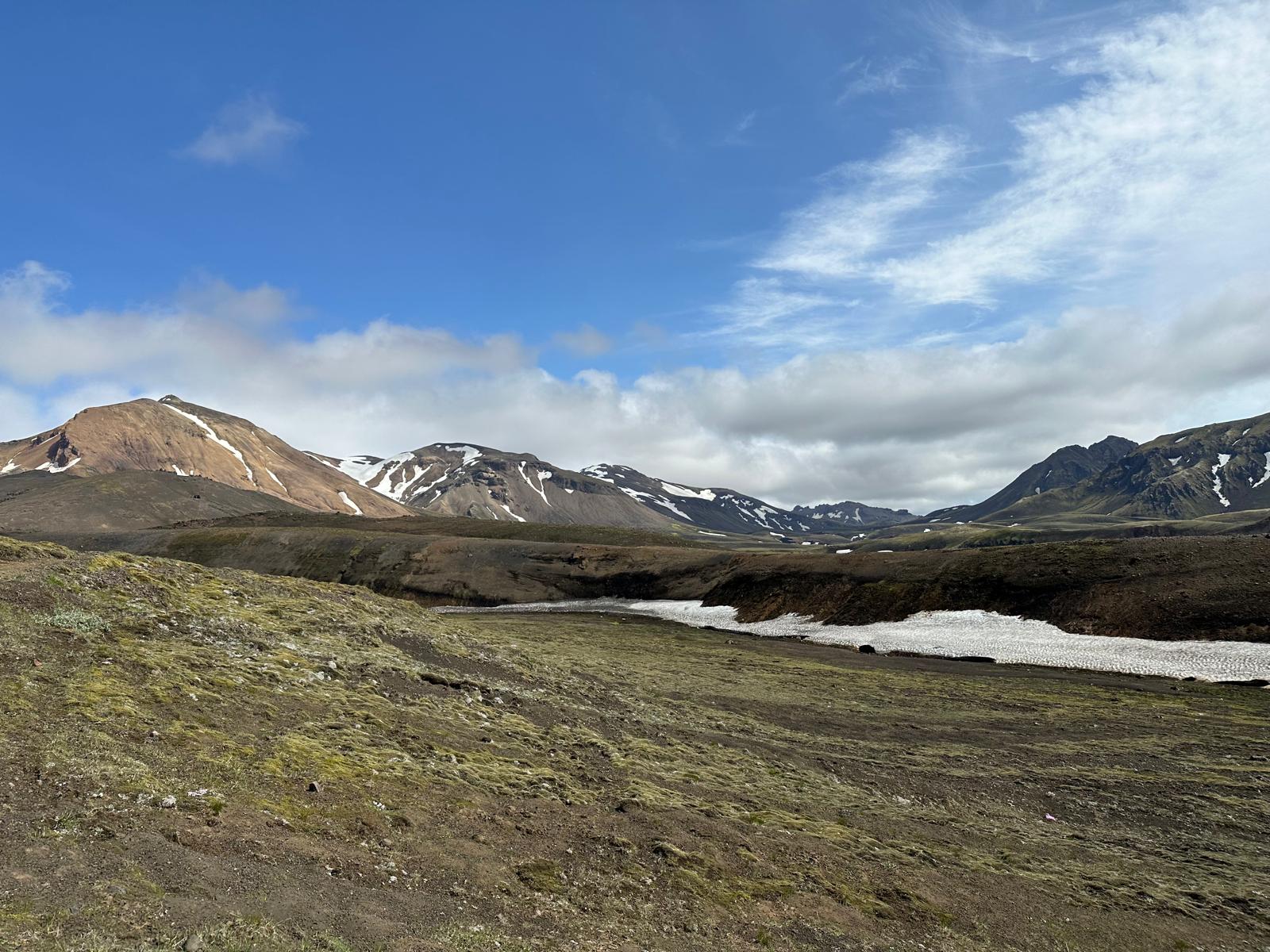
A storm rolled down from the highlands and erased the world. One breath, there was a trail. The next, there was nothing — no horizon, no landmarks, no sense of direction, only the violent whiteness of a landscape that wanted to erase me.
The wind hit so hard it stole breath straight from my lungs. The cold gnawed through my clothes like teeth. Visibility collapsed to the length of my arm. And for the first time on the Laugavegur trail, I felt something dangerous move through me:
the urge to sit down.
Just for a moment.
Just to catch my breath.
Just to stop hurting.
And that is when the rule revealed itself — not as wisdom, not as a quote, but as a survival instinct so clear it might as well have been carved into the ice around me:
If you can stand, you can move.
If you can move, you can live.
It sounds simple.
Almost obvious.
But it is the most powerful resilience lesson I’ve ever learned, and the one that has saved my life more times than I want to count.
Because the truth is this:
In every crisis, whether on a mountain, in a hospital bed, or in the middle of a broken life, paralysis is the real enemy.
And movement, however small, is salvation.

The Rule Born in Snow
People imagine survival as strength.
It isn’t.
Survival is movement.
In that Icelandic white-out, my body shook so violently I could barely grip my pack. My eyelashes froze together. The storm tore the world into pieces and demanded I surrender.
But I remembered something buried deep in my bones:
Motion creates warmth.
Stillness creates death.
This was not philosophy.
This was not hope.
This was reality.
So I made the smallest decision available to me:
Lean forward. Take one step. Then another.
No heroics.
No cleverness.
Just the oldest form of human defiance — walking.
That decision created the first flicker of psychological momentum. The world was still hostile. The storm still wanted me. But the act of moving (even blindly, even slowly) pulled me away from fear’s gravity.
Eventually, shapes appeared through the white: rocks, the faint suggestion of terrain, the soft ghost of the trail returning to life.
Survival rarely arrives as a breakthrough.
More often, it arrives as a single footprint.
Why This Rule Matters in Everyday Life
You may never face a blizzard on a volcanic plain.
But you will face storms of your own:
anxiety that locks your chest like a vice
grief that sits on your back until you can’t breathe
overwhelm that turns simple decisions into impossible ones
directionlessness that feels like fog swallowing your future
goals so heavy they crush the will to begin
In each of these moments, people try to think their way out.
But paralysis doesn’t break by thinking.
It breaks by moving.
The same rule that saved me in Iceland applies everywhere:
As long as you can stand, metaphorically or literally, you can take a step.
As long as you can take a step, you can change your trajectory.
This is how you overcome paralysis in life — not by solving everything, but by doing something.
A phone call.
A glass of water.
A shower.
A deep breath.
One page written.
One drawer cleaned.
One walk around the block.
One honest conversation.
One decision, even a small one.
Movement wakes the mind.
Movement breaks static.
Movement invites possibility.
The Psychology of Inertia
If you’ve ever been stuck — really stuck — you know the feeling:
Your body works.
Your mind works.
But you can’t move.
This is not weakness.
This is physics.
When life hits hard, your mind tries to conserve energy. It tries to protect you by freezing you in place, as if stillness could keep pain or fear from finding you.
But stillness becomes a trap.
You don’t climb out of emotional quicksand by staying still.
You climb out by reaching for the nearest root and pulling.
This is why survivors learn something the rest of the world forgets:
Motion is an antidote to panic.
Action is a balm to fear.
It doesn’t need to be big.
In fact, it shouldn’t be.
Tiny movement pierces the fog.
Tiny movement breaks the spell.
Tiny movement reminds the body that it is capable of choice.
And choice is freedom.
The Five-Minute Forward Rule
Here’s the simplest practical version of the Iceland rule — a tool to carry into any storm you face:
Commit to five minutes of forward motion. Nothing more.
Five minutes of writing.
Five minutes of tidying.
Five minutes of walking.
Five minutes of breathing.
Five minutes of doing the thing you’ve avoided.
Five minutes is small enough to start and significant enough to break inertia.
This is where motivation to keep going comes from — not from inspiration, but from momentum. And momentum is born from the smallest possible win.
When you start with five minutes, two things happen:
The task becomes smaller than your fear.
Momentum replaces hesitation.
You don’t need motivation to start.
You let the starting create the motivation.
This is how every trail is climbed.
This is how every life is rebuilt.
When Everything Feels Impossible
People often ask me what the hardest part of surviving is.
It’s not the pain.
It’s not the fear.
It’s not the hardship itself.
The hardest part is the moment right before you move — the moment when your mind is screaming at you to stop, to rest, to do nothing, to surrender.
That moment is a battlefield no one sees.
And that’s where this rule shines brightest.
If you can stand, even shakily, you can take the next step.
If you can take the next step, the world can’t fully take you.
This is how people survive blizzards.
This is how they survive grief.
This is how they survive heartbreak and failure and the storms no one else knows they’re walking through.
Not through perfection.
Not through strength.
But through motion.
The Rule That Can Save You Too
My Iceland survival story isn’t about athleticism or courage.
It’s about a choice anyone can make:
Do not stop in the storm.
Not while you can still stand.
This rule has guided me through injury, loss, trauma, recovery, and mountains that should have broken me. It has pulled me across deserts, through earthquakes, and out of hospital beds I was told I might never leave.
And it will work for you — not because my story is dramatic, but because the principle is simple:
Move.
Even when it’s hard.
Especially when it’s hard.
Not forever.
Not flawlessly.
Just now.
One minute of motion.
One step.
One breath forward.
Let the world shrink to that.
Let your courage begin there.
Because surviving anything — storms, heartbreak, fear, uncertainty — begins with the same ancient truth:
If you can stand, you can move.
If you can move, you can live.

The 60-Second Storm Test
When you finish reading this, set a timer for 60 seconds.
During that minute, pick one tiny action you’ve been avoiding — and do it immediately.
Here are examples:
• Put one dish away
• Send one message you’ve been delaying
• Drink a glass of water
• Open the document you’re scared to start
• Pick up one item off the floor
• Write one sentence
• Do one push-up
• Throw away one thing you don’t need
Why 60 seconds works:
Because momentum > motivation.
Because movement breaks paralysis.
Because your brain needs proof that you can still move.
When the timer ends, ask yourself:
Did that feel impossible — or did it feel like a beginning?
That’s the rule in action:
Not heroic motion.
Not perfect motion.
Just motion.
