The Table at the Back of the Room
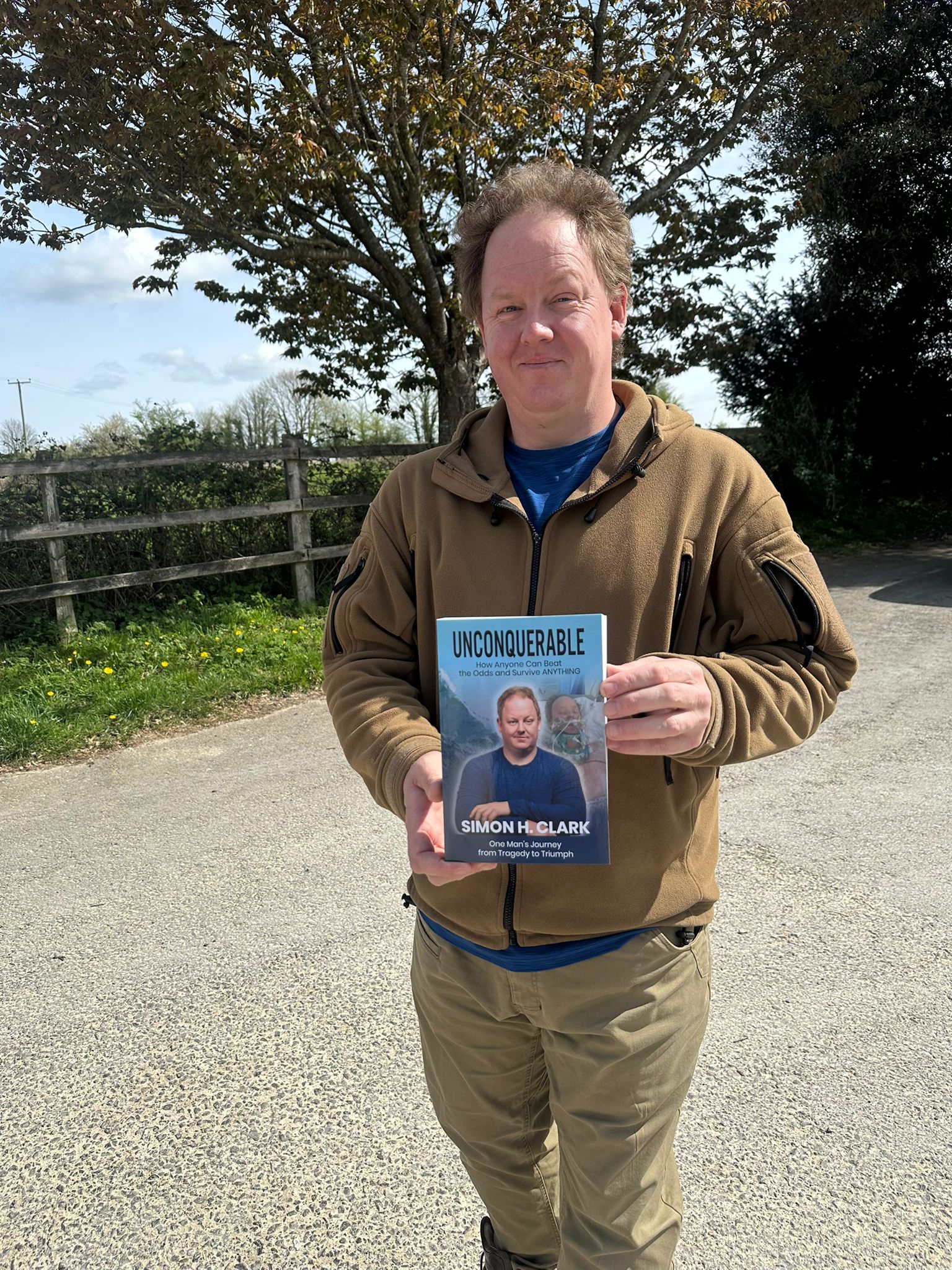
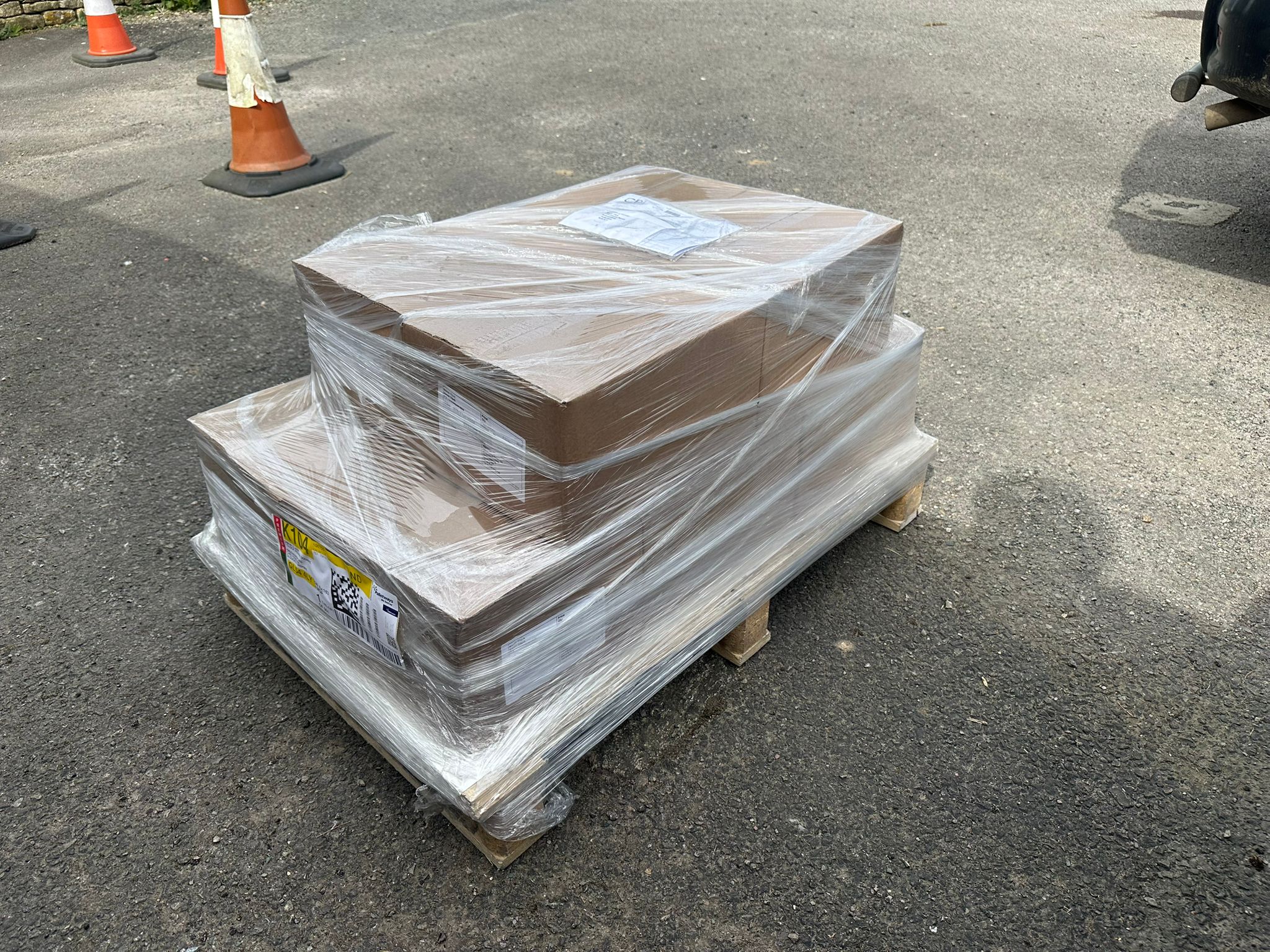
The books arrived on April 10th, and I didn't really know what to do with myself.
I'd been waiting for that box for weeks. I knew the cover, I'd approved everything, I'd read the thing more times than felt healthy. And then it arrived and I just stood outside looking at the box, not opening it, not doing anything in particular. Just standing there with a box that had my name on it, thinking about the version of me that was never supposed to exist.
In 2019, I was involved in a head-on collision near Cirencester. I'd only gone out to the supermarket. The crash took my partner's life and left me in a state that one of the paramedics on the scene, someone who has worked in critical care for years, would later describe as one of the most broken people he had ever seen that survived. I shattered the top three vertebrae of my spine, meaning my head was being held on by muscle and skin alone. I broke all of the ribs on my left side. My lungs and heart were damaged. I was given several blood transfusions on the roadside while a team performed emergency surgery in the dark to keep me alive long enough to make it to hospital.
The people who saved my life that night were the Critical Care Team from Great Western Air Ambulance Charity. They made the decision to bypass closer hospitals and take me to the Major Trauma Centre at Southmead in Bristol, managing the drugs and blood I needed throughout the journey. Their specialist paramedic Pete said later that they gave me pretty much every treatment they had. Without the decisions they made in those forty-five minutes, I would not have made it.
So when I stood in my home holding a book with my name on it — a book I'd written, a life I'd rebuilt — the weight of it was on behalf of everyone who got me here.
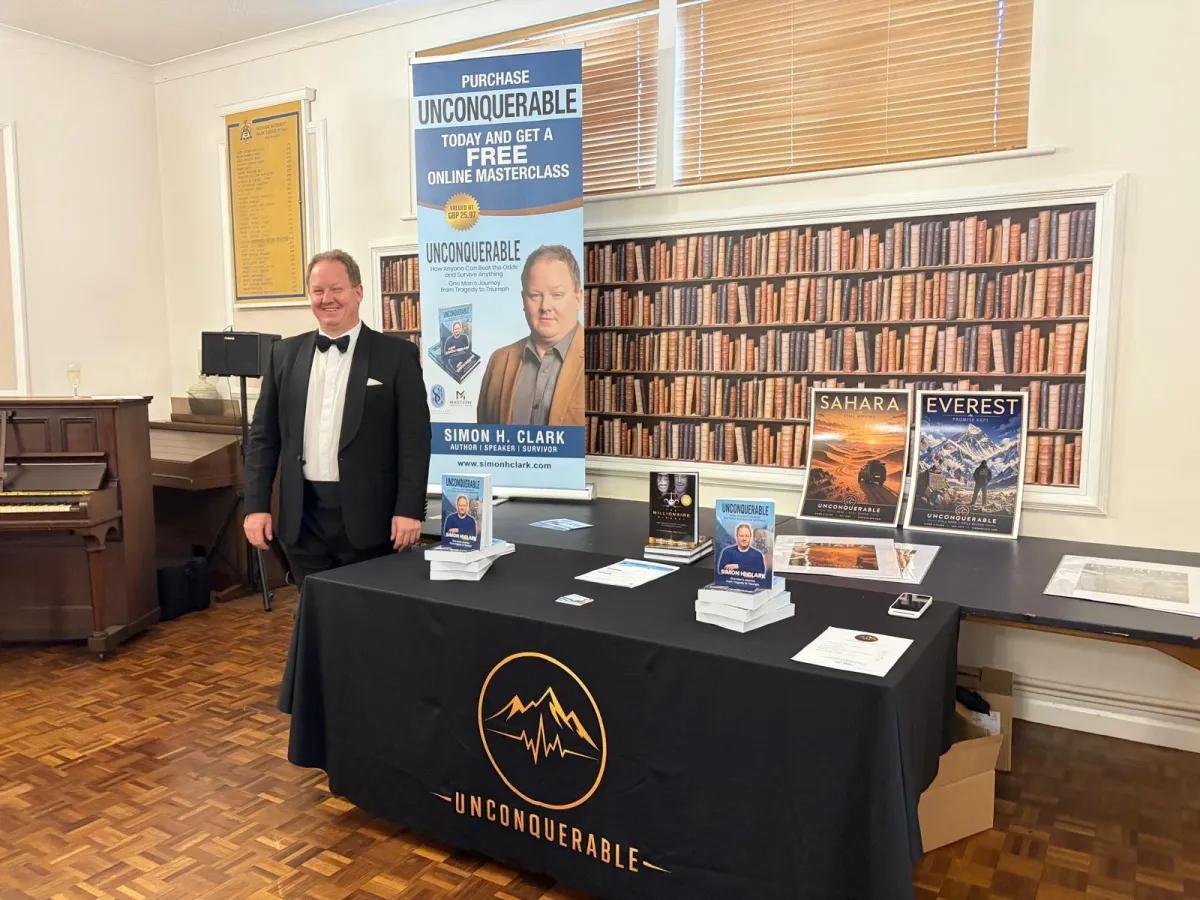
My first proper talk (the kind with a table at the back of the room) was May 13th. A small venue, twenty people, nothing that would look significant from the outside. But I'd never had a table before. A folding table with a few copies of a book and some merchandise on it, the kind of setup you'd walk past at a conference without a second glance. To me it felt enormous.
When I got to the end of the talk and said the words...
"If you'd like a copy of my book, please come to the back of the room."
I had to keep talking, keep moving, because if I'd stopped and sat with what I'd just said I'm not sure I'd have held it together. I'd rehearsed those words quietly in my head for so long that saying them out loud in a real room felt slightly unreal, like hearing a song you'd only ever heard in your own head suddenly playing on the radio.
Fourteen people walked to that table. I drove home that night smiling to myself in the car.
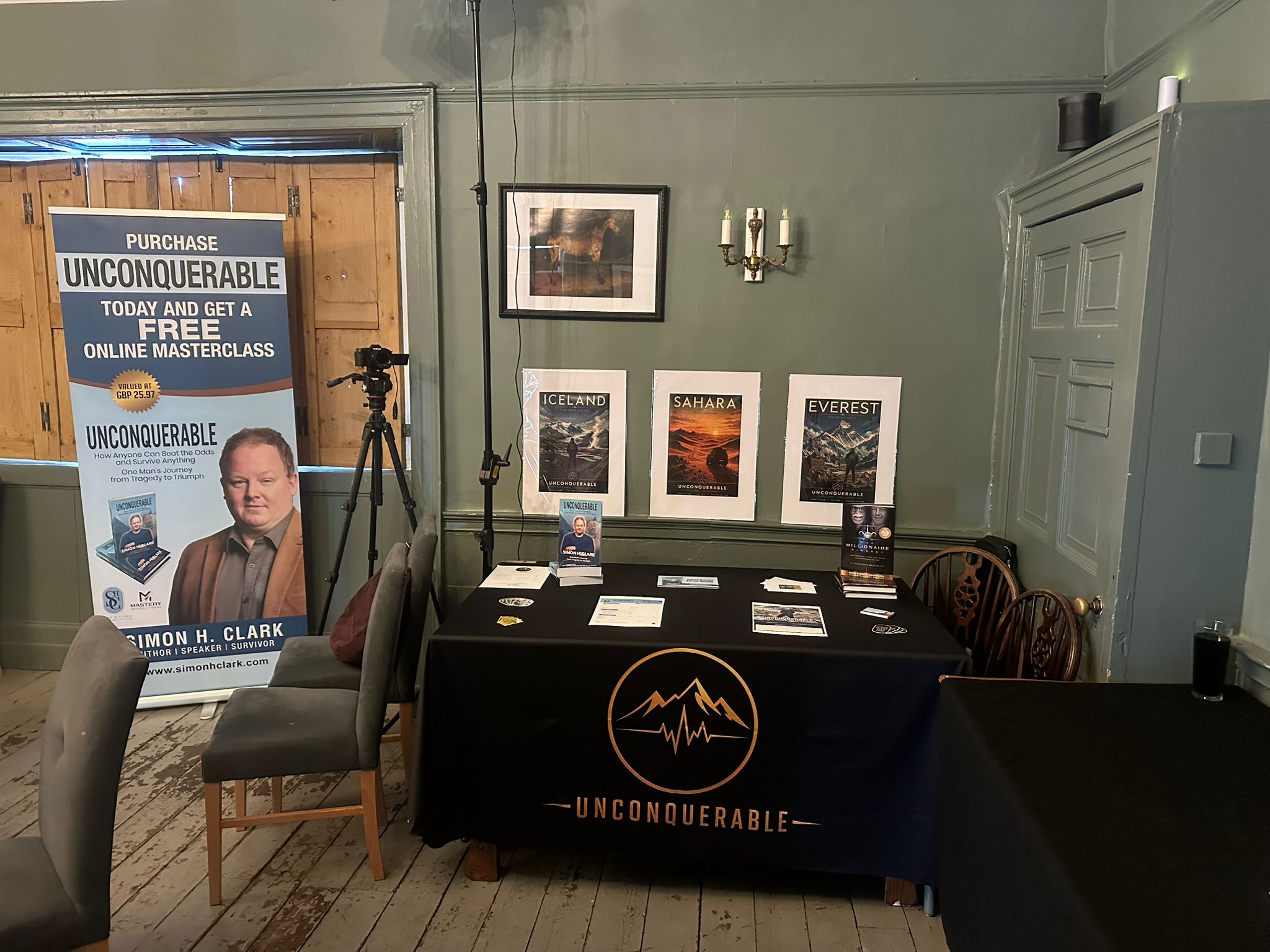
Nine days later there was a black tie dinner, thirty people, a higher-stakes room. Another table at the back. More books in hands on the way out.
I mention the numbers (£450 the first night, £555 the second) but they aren't the story. They matter to me for a reason that goes beyond the books themselves: the sales help me continue my fundraiser for GWAAC, because if there's one thing that writing about survival has taught me, it's that none of us get through the worst of it alone.
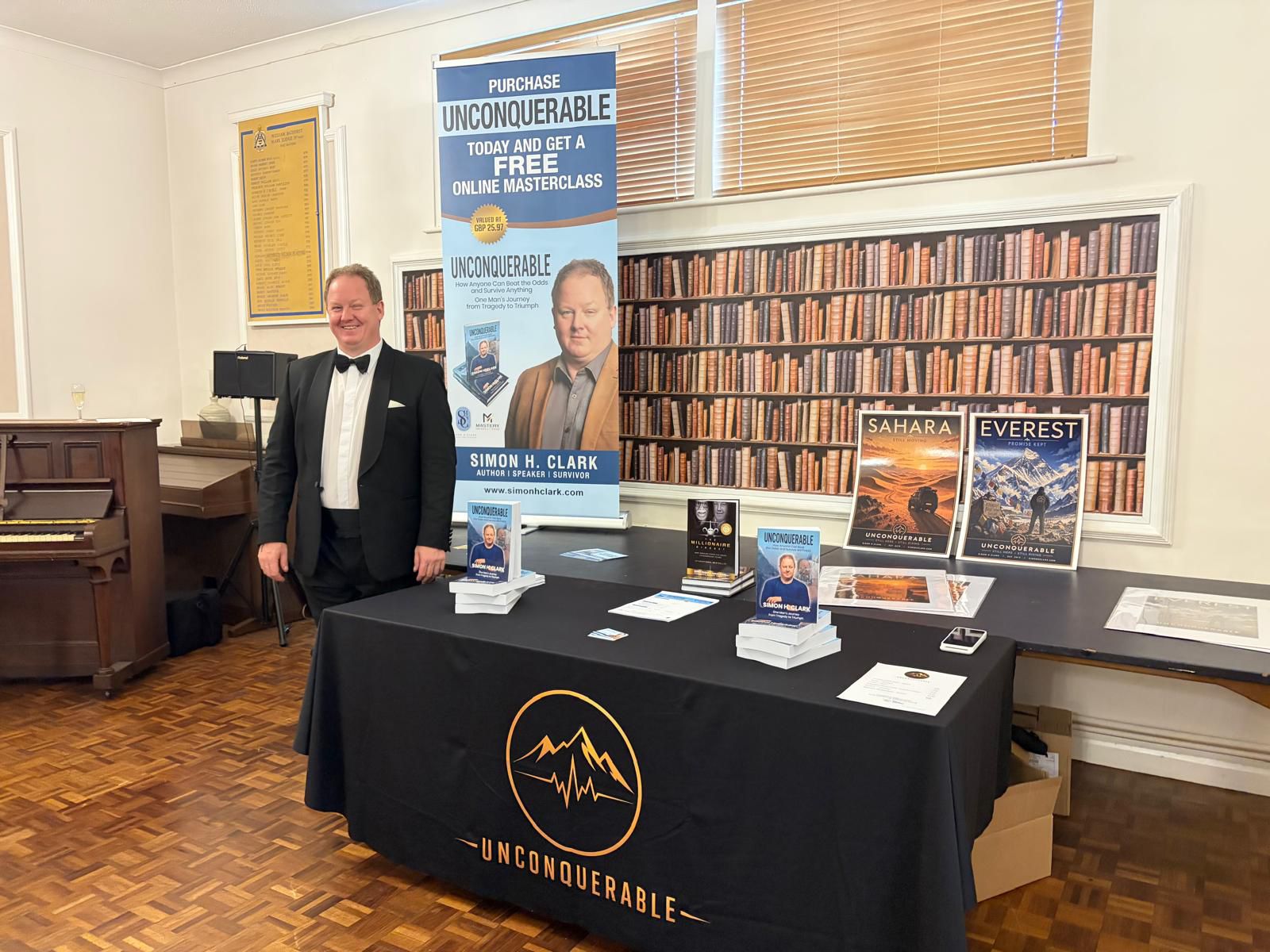
There are two books, and they came from different places.
The first is The Millionaire Mindset, co-written with Gerry Robert. It's about the way of thinking that underlies an extraordinary life, the beliefs and habits that sit beneath anyone building something real. I'm proud of it.
The second is mine alone: Unconquerable: How Anyone Can Beat the Odds and Survive Anything. It's the full story — the crash, the hospital, the recovery — but at its heart it's a book about what happens to a person in the middle of all of it. About the specific, unglamorous experience of deciding, over and over again in the dark, not to stop. I wrote it because I needed the worst of what happened to mean something beyond itself, and because I think there are people in the middle of their own impossible stretch who might need to hear that someone came out the other side.
When I was in that hospital, the gap between who I was and who I wanted to be felt so vast that wanting itself started to feel dangerous, like the kindest thing I could do for myself was to stop reaching and accept the smaller future being drawn around me. I nearly did. There were days I nearly let the wanting go entirely. What I know now, standing on the other side of it, is that the wanting was never the problem. It was the thread I needed to follow. It didn't always lead anywhere comfortable, and it didn't protect me from more setbacks along the way, but it kept me pointed in a direction when everything else was uncertain.
I don't tell this story because I think I'm exceptional. I tell it because I think the impulse to keep going when things fall apart is far more common than we give ourselves credit for, and it deserves to be spoken about plainly. The version of you that gets through your difficult stretch is already real. They're just further down the road than you can currently see.
Keep going.